
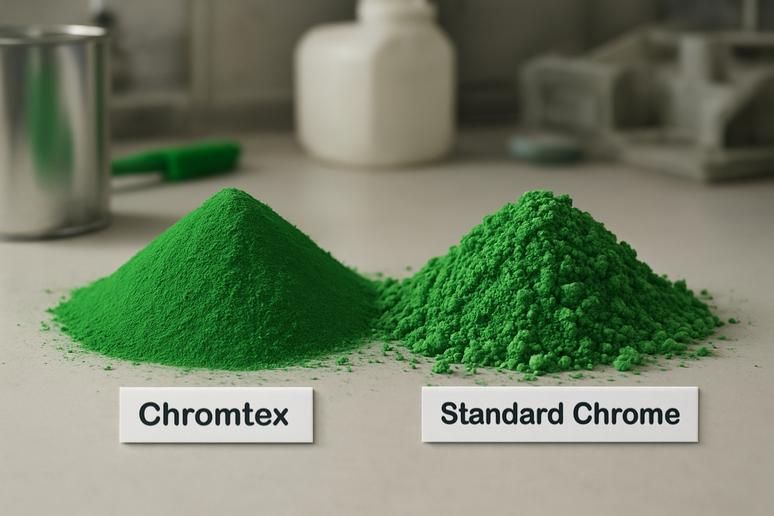

Picking the right pigment might sound like a small detail, but trust me, it can make or break the look and performance of your products in industries like paint, plastics, and construction. Choosing between Chromtex and standard chrome pigments isn’t just about colour—it affects quality, durability, and even cost.
Let’s dive into what sets these two apart, so you can make a well-informed choice. We’ll look at their characteristics, where they’re typically used, and how they stack up when it comes to things like colour intensity, dispersibility, and environmental impact. If you work with pigments, you’ll want to stick around for this.
What is Chromtex?
Chromtex is a special kind of synthetic chrome oxide green pigment, mainly made up of Cr2O3. What makes it stand out is its super fine milling, which really boosts its performance in different materials. The smaller particle size isn’t just a techy detail—it actually makes a big difference in how well the pigment works.
This pigment is known for being super stable and reliable. The process to make Chromtex ensures you get consistent quality every time, which is a huge plus if you need dependable colouring for your products. It’s no wonder it’s considered a top pick in various sectors.
Understanding Standard Chrome Pigments
On the flip side, standard chrome pigments cover a wider group of inorganic colourants you’ll see all over the place. Think chromium oxide greens, some lead chromates (which have been around a long time), and other chromium compounds. Each has its own chemical makeup and physical traits.
These traditional pigments have been industry workhorses, offering colours from yellow and orange to green. But their quality fluctuates a bit, especially when you compare fineness, purity, or how eco-friendly they are. Plus, they might not disperse or colour quite as well as the more specialized stuff like Chromtex.
Comparing Chromtex and Standard Chrome Pigments
So, when you’re stuck choosing between Chromtex and your run-of-the-mill chrome pigment, it really boils down to what you need for your project. Let’s break down some key areas:
Colour Intensity and Hiding Power
Thanks to Chromtex’s fine milling, it packs a punch with vibrant and consistent colour. You usually don’t need to use as much pigment to get the shade you want, which is a win for both cost and performance. The tiny particles scatter and absorb light more effectively, giving you richer colours.
Plus, Chromtex has excellent hiding power—it covers what’s underneath like a pro, needing less product to get the job done. That saves money and looks better, especially in paints and coatings. Standard chrome pigments often require bulkier amounts to reach the same kind of pop and coverage.
Dispersibility and Application Performance
Here’s where Chromtex really shines: it disperses like a charm. Its fine particles mix evenly and smoothly, so you won’t run into clumps or inconsistencies when making things like paints or plastics. That means less hassle during production and a better final product.
Good dispersion impacts how uniform and smooth your paint or coating looks and performs. When you use Chromtex, it’s smoother sailing compared to some standard chrome pigments that might be coarser and cause problems with mixing.
Durability and Stability
Chromtex is pretty tough. Being a synthetic chrome oxide green, it stands up well against weather, chemicals, and UV rays—so it won’t fade easily. This makes it perfect for stuff like building facades, concrete roofings, tiles, and coloured glass where lasting colour is crucial.
Older standard chrome pigments, like lead chromates, don’t always have that kind of durability or resistance, which can be a real drawback depending on your application.
Environmental and Safety Aspects
Safety-wise, Chromtex scores big points. It’s a pure chromium oxide green pigment without nasty heavy metals like lead—which you might find in old-school chrome yellows and oranges. This means it’s safer not just to make but also to use in finished products.
Especially if you’re working in the UK or Europe, regulations like REACH keep a close eye on toxic substances. Chromtex fits the bill by ticking all the environmental boxes, making it a responsible choice for companies aiming to keep things green and clean.
Applications of Chromtex vs Standard Chrome
Because these pigments play by different rules, they tend to find their homes in different types of products. Let’s have a quick look:
Use Cases of Chromtex
- Paints, primers, and fillers—where fine milling and good hiding power give you top-notch finish and consistent colour
- High-quality architectural coatings and industrial paints due to its excellent dispersibility and durability
- Plastics and rubber products, adding stable, vibrant green shades
- Flooring, enamelling, colour glass, and ceramic frits, where heat and chemical resistance are a must
Standard Chrome Pigment Typical Applications and Limitations
- Building materials, ceramics, and some industrial coatings that benefit from basic thermal stability and chemical resistance
- Cost-effective colouring for bulk materials
- However, lead chromates are increasingly restricted due to their health and environmental impact, especially in the UK and Europe
- While they offer vibrant colours, their toxicity and stricter regulations often make them less appealing than Chromtex
Packaging and Availability
Chromtex is made with industrial users in mind. You’ll mostly find it in 25 kg net bags, which are perfect for smaller batch mixing, or in large 1000 kg big-bags for bigger production runs. This flexibility helps different manufacturers fit it into their workflows hassle-free.
Which One Should You Choose?
When it comes down to it, your choice between Chromtex and standard chrome pigments depends on what your project really needs. For high-performance, consistent colour, and meeting tough environmental rules, Chromtex is often the front-runner. Yes, it might cost a bit more upfront, but the benefits in durability and quality can pay off big time.
If your project is less demanding or budget is tight, some standard chrome pigments might still make sense, especially in bulk construction materials. But remember, you might be giving up some colour vibrancy, dispersion efficiency, and compliance with modern regulations.
Think about factors like how bright the colour needs to be, how easy you want the mixing process to go, and what kind of environment the finished product will face. Plus, environmental and safety concerns—especially relevant in the UK—should not be taken lightly. Learn more about UK regulations and compliance updates here.
Conclusion
The bottom line? Chromtex tends to outshine standard chrome pigments on a lot of fronts: finer milling, brighter colours, better dispersion, stronger durability, and safer environmental credentials. For projects where these things matter, it’s a clear winner.
But every project is different. Balancing aesthetics, function, budget, and regulations is key. Do your homework, ask for samples, and talk to suppliers to figure out what fits your needs best.
If you’re keen to see how Chromtex could work for you, don’t hesitate to request technical datasheets or samples. And reaching out to manufacturers for advice can be a game changer—they often have tips that make a big difference in your material choices and processes.