
Marcus Hamberg, the Swedish filmmaker who’s been turning heads with his minimalist, emotionally charged storytelling, has really changed the game. He dives deep into memory, time, and human feelings, crafting stories that feel personal but hit universally. One standout moment is the “Marcus Hamberg Flashback” from his 2025 film, Temporary Echoes. This scene has become iconic, marking a significant point in modern cinema.
What’s fascinating about this flashback is how it captures attention — it’s not your typical narrative device. Instead of laying out the plot, it offers an immersive emotional journey. In this article, we’ll unpack the magic behind the “Marcus Hamberg Flashback,” exploring its artistic layers, its deep meaning, and why it’s left such a lasting mark on the culture.
1. Who Is Marcus Hamberg?
So, who exactly is Marcus Hamberg? He’s a highly regarded Swedish filmmaker and visual artist from Stockholm. What’s cool is how his background in architectural design and film really shines through in his work — think precise visuals and well-crafted structures. But Hamberg doesn’t just show you a story; he pulls you in emotionally with subtle moves, thoughtful framing, and a lot of meaningful silence.
His style revolves around how memory isn’t straightforward or neat, and how emotional realism — that raw, honest feeling — really speaks to us. Inspired by giants like Andrei Tarkovsky and Ingmar Bergman, Hamberg weaves realism with surreal touches, expressing some of our deepest human truths. That’s exactly what the “Marcus Hamberg Flashback” is all about: a quiet, intense moment showing human vulnerability at its finest.
2. What Is the Marcus Hamberg Flashback?
The “Marcus Hamberg Flashback” is a key part of Temporary Echoes, an experimental short film that came out in 2025. It’s a short, wordless sequence roughly seven minutes into the film that quickly took off online among cinephiles and social media users alike. People were drawn to its calm intensity and how it flips the usual flashback format on its head.
Instead of clearing things up like traditional flashbacks do, Hamberg’s version is more like an abstract memory puzzle — a blend of real and imagined moments that feels much closer to how our minds actually recall the past. This turns the flashback into a powerful emotional and psychological experience, inviting you to reflect instead of just following a straightforward story.
3. The Meaning Behind the Marcus Hamberg Flashback
At its heart, this flashback dives into grief, identity, and how fragile memory truly is. It doesn’t show a clear event but makes you feel what it’s like to remember — the flickers, the missing pieces, the echoes of what once was.
What’s really striking is how Hamberg took out music and dialogue. This silence leaves room for you to bring your own feelings and memories into the scene, making it both universally relatable and deeply personal. Mirrors, reflections, and water pop up throughout, symbolizing how truth gets warped over time. It’s a beautiful, emotional study of impermanence — showing exactly what cinema can say when words fall short.
4. Artistic Construction of the Scene
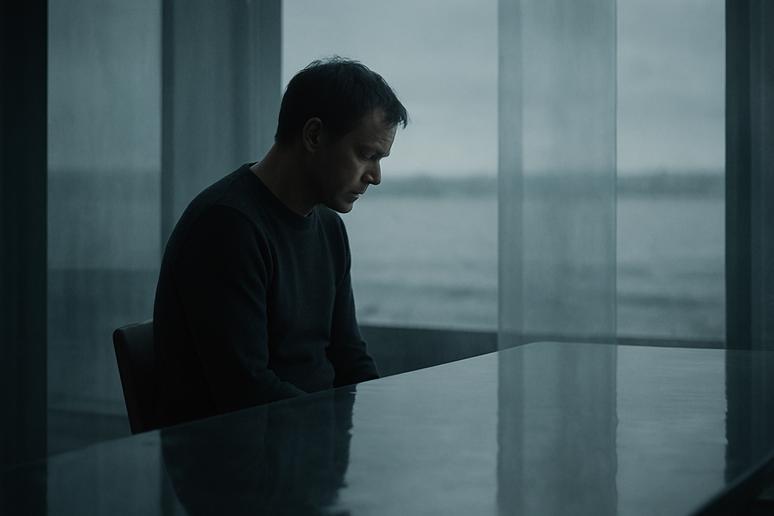
Visually, Hamberg’s style is on full display here. The scene uses muted grays and cool blues, perfectly capturing that numb feeling of emotional distance. You’ll notice long, steady shots framed behind glass, fabric, or reflections — all cleverly hinting at the separation between us and the past.
The sound design is just as crucial. Hamberg purposely throws off the sync between sound and image, creating a disjointed feeling that mirrors how memories bubble up in our minds. You get muffled voices, soft background noise, and extended stretches of silence that really crank up the emotional tension. The editing isn’t about making sense in a linear way but follows a poetic beat — like the heartbeat of the scene — focusing more on mood than plain storytelling.
5. Audience and Critical Reception
What’s impressive is how the “Marcus Hamberg Flashback” blew up not through flashy marketing but because it genuinely struck a chord with people. Social media buzzed with reaction videos and deep-dive analyses, with many calling the experience “unexplainably personal” and deeply moving. This organic buzz turned the scene into a collective emotional event.
Critics and scholars have also been raving. It’s now studied as a modern masterpiece of emotional architecture in film classes and academic journals. Prestigious film magazines in the UK and worldwide have applauded Hamberg for reshaping how emotional memory is portrayed visually, cementing the flashback’s place in both art and education.
6. Comparison to Traditional Cinematic Flashbacks
Traditional flashbacks usually spell things out — explaining the plot or character motives to keep the story clear. Hamberg takes a completely different path. Instead of clarity, he goes for immersion.
Think of movies like Inception or Memento, where flashbacks drive the narrative forward. Hamberg’s flashback ditches explanation and focuses on how it feels. It’s sort of the anti-narrative approach, meant to make you feel instead of just understand. This fits right in with European slow cinema but with a fresh, modern twist for the digital age. The scene embraces uncertainty and mirrors real life’s fragmented memory, all while championing minimalist storytelling that prioritizes inner feelings over external action.
7. Fan Theories and Interpretations
Since it’s so open to interpretation, the “Marcus Hamberg Flashback” has inspired plenty of fan theories. Some folks think it shows a buried trauma resurfacing, with the fragmentary images representing a subconscious effort to piece together old pain. Others see it as a made-up memory — maybe the protagonist’s way of filling emotional gaps.
Another popular take? That it’s a metaphor for artistic rebirth — how remembering itself can be a creative act. These varied ideas have sparked a whole digital mythology around the scene, with essays and tribute videos popping up all over. It’s like Hamberg turned his work into a kind of interactive emotional puzzle, inviting viewers to join the storytelling in their own way.
8. The Cinematic Impact and Influence
Hamberg’s flashback didn’t just stay inside the film — its ripple effects spread wide. Its mix of minimalist storytelling and genuine emotion has inspired a wave of new filmmakers, especially across Europe. Film festivals have noticed a spike in entries with non-linear plots and ambient soundtracks, often crediting Hamberg as their muse.
His influence stretches beyond just movies, too—think ads, music videos, even immersive digital art. The “Marcus Hamberg Flashback” reshaped what a “cinematic moment” means, proving that sometimes subtle emotions speak louder than flashy visuals. It’s a reminder that in today’s visual overload, deep emotional subtlety still captures hearts.
9. Behind the Camera – Hamberg’s Creative Process
Putting together the flashback was no easy feat. Hamberg balances careful planning with artistic spontaneity. He’s famous for using natural light, long takes, and stepping back to let actors tap into real emotions. His cinematography team played with reflections, translucent barriers, and layered shots to make the scene feel disorienting and fragmented — much like actual memories.
In post-production, Hamberg deliberately offset sound and image by tiny fractions of a second, creating a sense of temporal shift. Philosophically, he calls his method “listening to silence,” believing silence reveals deeper truths. One of his memorable quotes ties this together perfectly: “The past doesn’t live behind us—it whispers beneath us.” This idea really anchors the flashback’s unique structure.
10. Marcus Hamberg’s Future Projects
Riding the success of Temporary Echoes, Hamberg is already cooking up new projects that dive even deeper into memory and emotion. One upcoming limited series will explore “fabricated memories” and how we emotionally perceive the world, continuing his fascination with time and remembering.
There’s also word of a feature-length film in the pipeline, aiming to revisit the philosophical core of the flashback. It’s said to use cutting-edge visuals, including mixed-reality and AI-assisted design, to craft immersive memory simulations. If his past work is anything to go by, these projects will push emotional realism in film even further, blending old-school craft with new tech.
Conclusion
The “Marcus Hamberg Flashback” isn’t just a scene — it’s a quiet revolution in how movies tell emotional stories. It invites us to sit with memory, emotion, and time in a way few films do. Beneath its simple surface lies incredible depth, a space where viewers can meet their own reflections and feelings. By choosing silence over words and ambiguity over clarity, Hamberg created a visual language that crosses cultural lines and speaks straight to our subconscious.
This groundbreaking scene has sparked a new wave of filmmakers, nudging cinema toward empathy, introspection, and the fractured way we remember. Hamberg’s legacy is already changing how we connect with stories on screen. The “Marcus Hamberg Flashback” will surely continue to echo in film history as a reminder: cinema’s true power isn’t in spectacle, but in that shared, quiet heartbeat between artist and audience, connecting us to our deepest memories and emotions.